Sourdough Starter from Scratch
v1.0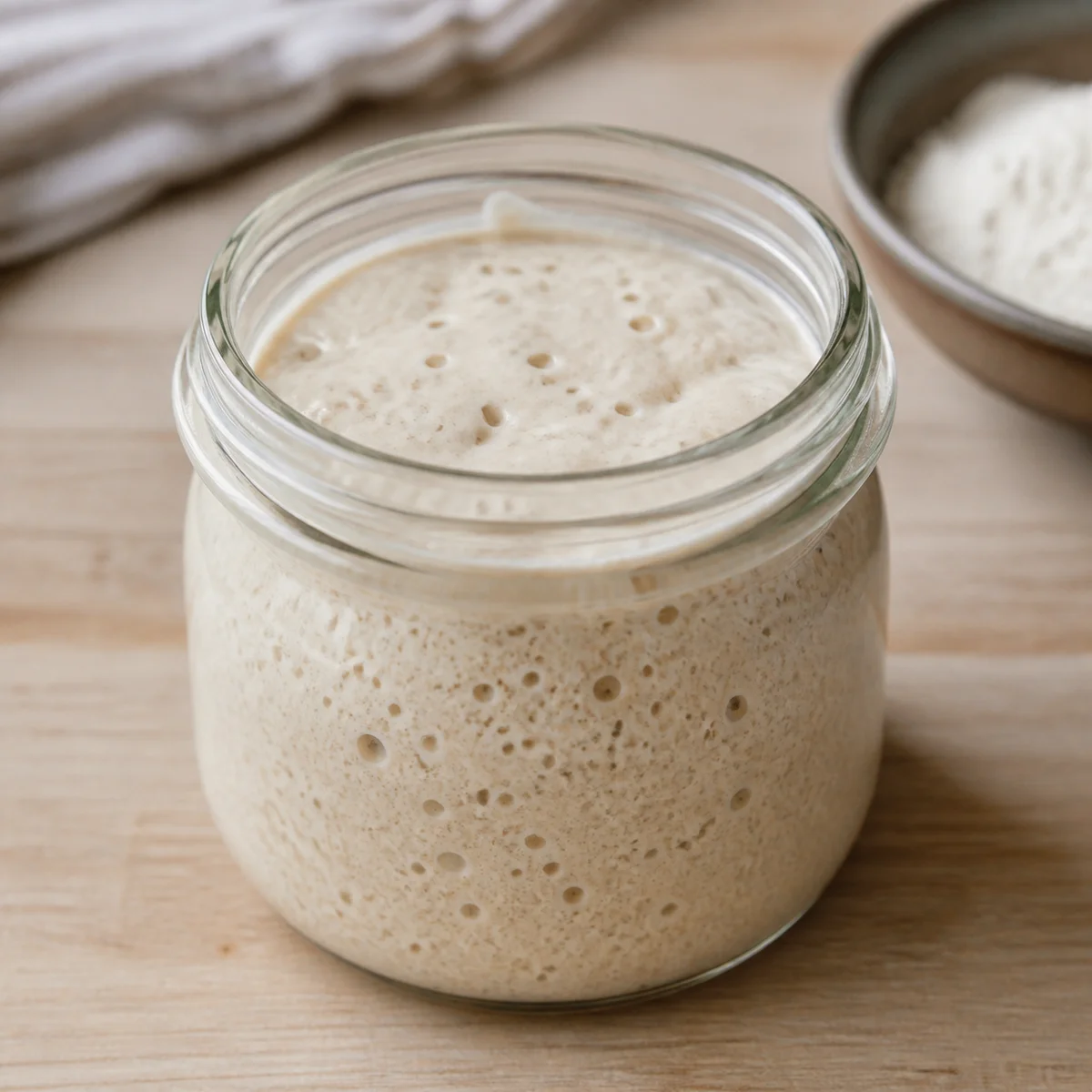
Flour and water develop into an active sourdough culture through regular feeding and careful observation. The schedule explains the early false rise, the quiet middle days, and the signs of a starter ready to bake with.
Contribute
Sign up free to remix, save, or suggest edits to this recipe.
Equipment
- Kitchen scale
- Clean 1-quart jar
- Loose-fitting lid
- Rubber band or washable marker
- Clean spoon or spatula
Instructions
- 1
On day 1, mix 60 g whole wheat flour with 60 g non-chlorinated water in the clean jar. Scrape down the sides, mark the level, cover loosely so gas can escape, and keep at 70 to 75 F for 24 hours.
⏱ 1440 min
- 2
On day 2, discard all but 60 g starter. Mix in 60 g all-purpose flour and 60 g water. A dramatic rise now is common but often temporary, caused by an early wave of bacteria rather than a mature starter.
⏱ 1440 min
- 3
On days 3 through 5, repeat the same 60 g starter, 60 g flour, and 60 g water feeding every 24 hours. The starter may look quiet after its early rise. Continue unless it shows contamination.
⏱ 4320 min
- 4
From day 6 onward, if the starter rises and falls within 24 hours, feed every 12 hours using 30 g starter, 60 g flour, and 60 g water. If it remains sluggish, continue feeding every 24 hours to avoid diluting the developing culture.
⏱ 8640 min
- 5
Use a clean jar whenever residue builds up on the sides. Gray liquid or a sharp acetone smell can mean the starter is hungry, but fuzzy growth or pink, orange, green, or black discoloration is contamination. Discard the entire starter if any mold or colored streak appears.
⏱ 2 min
- 6
The starter is ready when it reliably doubles within 4 to 8 hours after feeding for at least 3 consecutive feedings and smells pleasantly tangy, fruity, or yeasty. This commonly takes 7 to 14 days.
⏱ 5 min
- 7
For frequent baking, keep the starter at room temperature and feed it daily. For weekly baking, refrigerate it after a feeding, refresh it at least weekly, and give it one or more room-temperature feedings until it doubles predictably before use.
⏱ 5 min
Like this recipe?
Save it to your free cookbook, track your own tweaks across versions, and share what works.
No subscription. No credit card. Just a free place for your recipes.