Napa Cabbage Kimchi
v1.0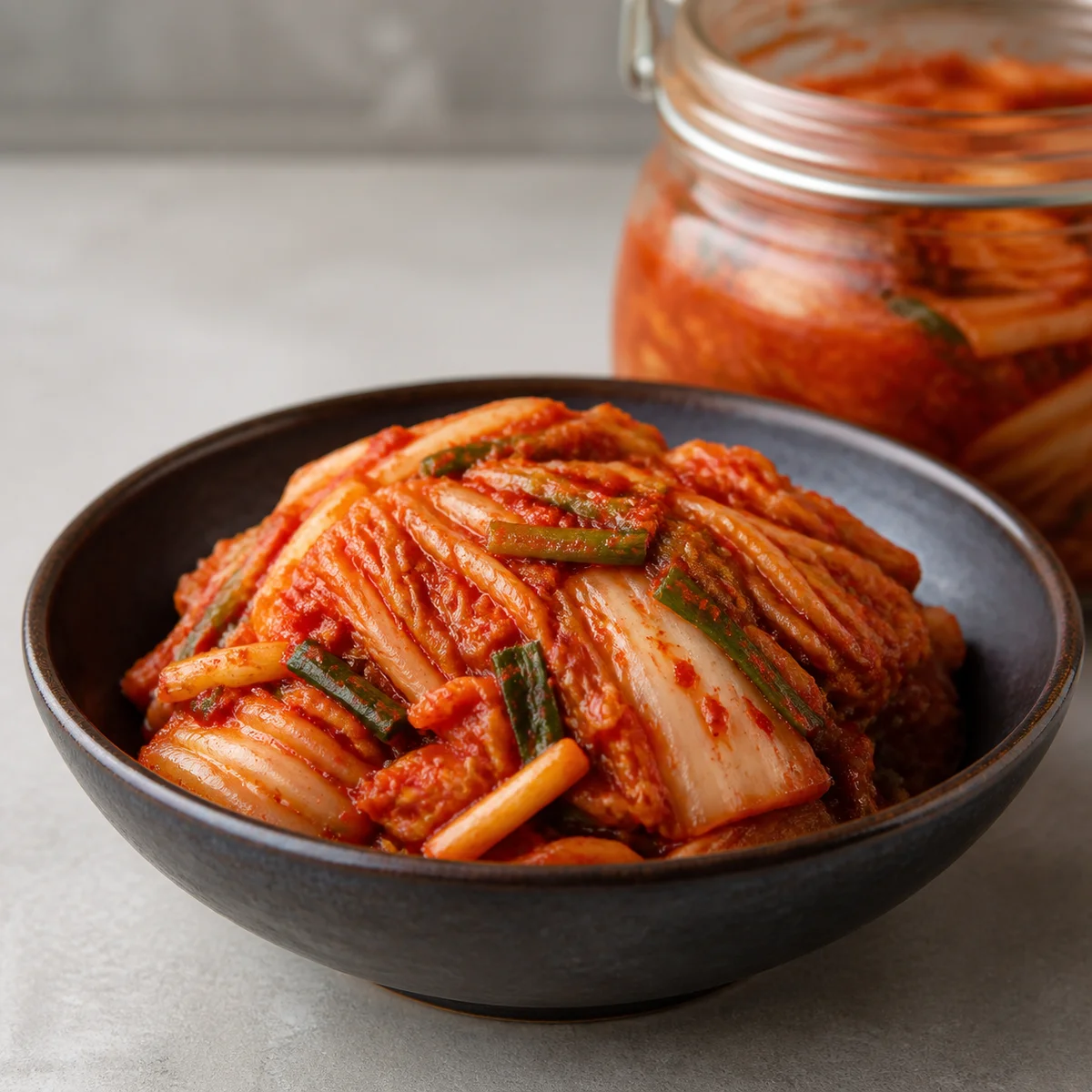
Napa cabbage is salted, rinsed, and coated with a vivid gochugaru paste that ferments quickly. A short room-temperature start develops acidity before cold storage slows the process.
Contribute
Sign up free to remix, save, or suggest edits to this recipe.
Equipment
- Large nonreactive bowl
- Small saucepan
- Clean 1-quart wide-mouth jar
- Fermentation weight and vented lid
- Food-safe pH meter
Instructions
- 1
Put the cabbage in a large bowl, sprinkle every layer with the salt, and massage gently. Rest for 90 minutes, turning the cabbage every 30 minutes, until flexible and reduced in volume.
⏱ 90 min
- 2
Rinse the cabbage three times under cool running water, then drain thoroughly for 20 minutes. Salting should wilt the leaves without leaving gritty salt behind.
⏱ 25 min
- 3
Whisk the water and rice flour in a small saucepan. Cook over medium heat until translucent and lightly thickened, about 3 minutes, then cool completely.
⏱ 8 min
- 4
Stir the gochugaru, fish sauce, garlic, and ginger into the cooled paste. Add the daikon and scallions, then coat the drained cabbage thoroughly using clean hands or food-safe gloves.
⏱ 10 min
- 5
Pack the kimchi firmly into the clean jar, pressing out air pockets and leaving 2 inches of headspace. Add a weight so the vegetables remain under their liquid as brine develops, then fit a vented lid.
⏱ 5 min
- 6
Ferment at 68 to 72 F for 1 to 2 days. Vent pressure at least daily if the lid is not self-venting. Move the jar to the refrigerator once it tastes pleasantly sour and reaches pH 4.6 or lower, ideally near 4.2.
⏱ 1440 min
- 7
Keep the kimchi refrigerated and the solids below the brine. Discard the whole batch without tasting if it develops fuzzy, raised, blue, green, black, or pink mold, a rotten odor, or a slimy texture. It is not shelf stable.
⏱ 2 min
Like this recipe?
Save it to your free cookbook, track your own tweaks across versions, and share what works.
No subscription. No credit card. Just a free place for your recipes.