Milk Kefir
v1.0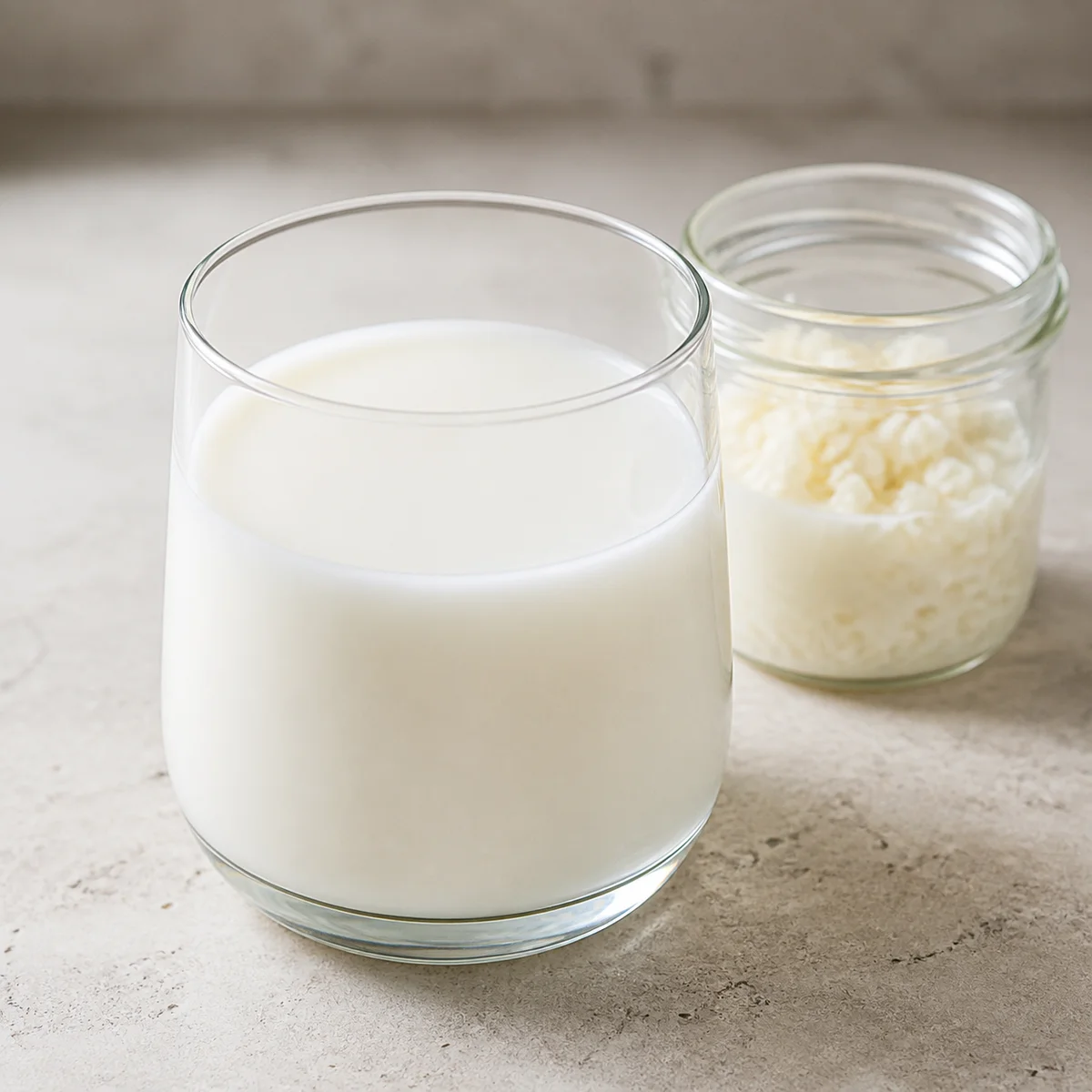
Reusable kefir grains culture pasteurized milk into a pourable drink with gentle tang and light effervescence. A controlled temperature, measured acidity, and immediate refrigeration keep the daily rhythm predictable.
Contribute
Sign up free to remix, save, or suggest edits to this recipe.
Equipment
- Clean 1-quart glass jar
- Loose-fitting lid
- Nonreactive fine-mesh strainer
- Food-safe pH meter
- Controlled-temperature incubator
Instructions
- 1
Wash hands and clean the jar, lid, strainer, and utensils thoroughly. Put the active kefir grains in the jar and add the pasteurized milk.
⏱ 5 min
- 2
Cover loosely so gas can escape. Incubate at the temperature specified by the grain supplier, commonly 68 to 75 F, using a controlled environment rather than a counter with large temperature swings.
⏱ 1440 min
- 3
Begin checking after 18 hours. The milk should smell cleanly tart and thicken slightly. Measure with a calibrated food-safe pH meter and continue only until it reaches pH 4.6 or lower, usually within 18 to 24 hours.
⏱ 5 min
- 4
If the milk does not reach pH 4.6 within 48 hours, discard the milk without tasting it and consult the culture supplier before reusing the grains. Also discard a batch with mold, pink or orange color, a rotten odor, or unusual slime.
⏱ 2 min
- 5
Strain the kefir into a clean container, reserving the grains for the next batch. Refrigerate the finished kefir immediately at 40 F or colder. It is not shelf stable.
⏱ 5 min
- 6
Keep the kefir covered and refrigerated and use within 7 days. Start the next batch with fresh pasteurized milk, or store the grains according to the supplier's instructions if pausing.
⏱ 2 min
Like this recipe?
Save it to your free cookbook, track your own tweaks across versions, and share what works.
No subscription. No credit card. Just a free place for your recipes.